
When Weather Turns Against You, Experience—Not Luck—Guides Every Recovery Decision
Rain that turns pavement slick. Fog that erases depth perception. Snow that hides shoulders and ditches. These conditions don’t pause traffic or emergencies—they amplify them. In moments like these, drivers rely on emergency towing in Findlay not just to show up, but to adapt. Recovery under adverse weather and low visibility demands more than standard towing. It requires judgment, equipment, and calm precision.
At Ed’s 24 Hour Service, emergency towing crews adjust techniques in real time, accounting for visibility, traction, vehicle type, and roadside hazards.
Emergency towing adapts recovery techniques in poor weather and low visibility by slowing operations, using specialized lighting and equipment, adjusting attachment methods, and prioritizing scene safety. These changes reduce risk, prevent secondary accidents, and protect vehicles when conditions are unpredictable.
Why Emergency Towing Changes Everything When Conditions Deteriorate
Bad weather doesn’t just make towing harder. It changes the physics of recovery. Reduced friction affects braking. Wind alters load stability. Darkness and fog shrink reaction time. That’s why emergency towing follows different protocols once visibility drops or weather worsens.
People also ask: Is towing more dangerous in bad weather? The honest answer is yes—if crews don’t adapt. In Findlay, recovery teams regularly face rainstorms, winter snow, and fog-heavy mornings near open areas like Riverside Park and surrounding roadways. Emergency towing crews prepare for these patterns, adjusting recovery techniques to match real conditions, not ideal ones.
The Most Common Mistakes Drivers Make During Weather-Related Breakdowns
Adverse driving conditions don’t just complicate towing operations—they also influence driver decisions in ways that increase risk. Reduced visibility, unstable road surfaces, and heightened stress often lead to mistakes that escalate minor breakdowns into serious safety incidents.
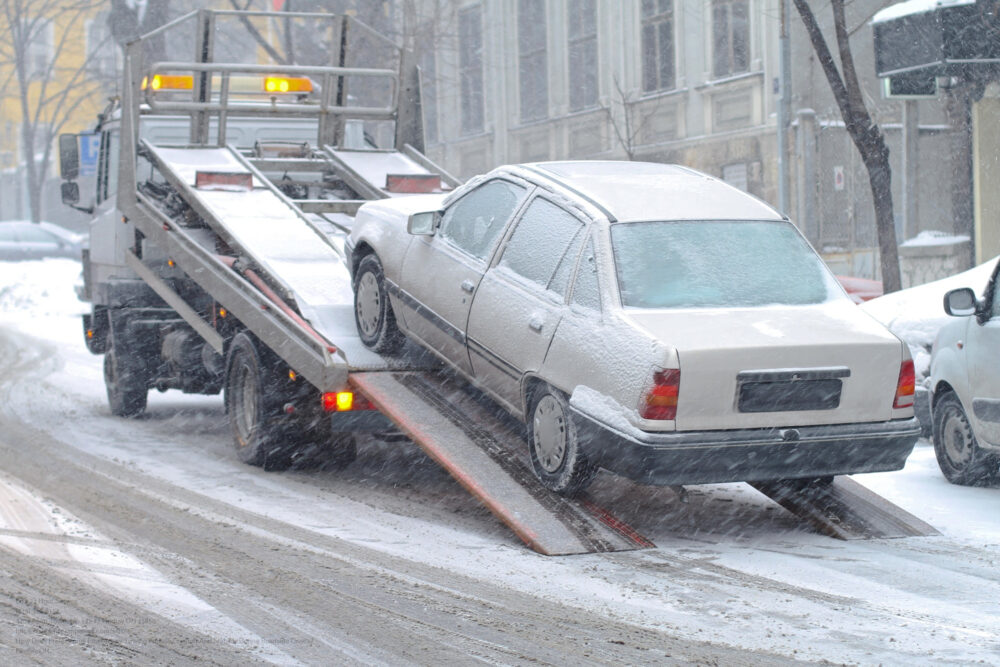
Common mistakes drivers make during poor weather and low-visibility conditions include:
- Attempting to move a disabled vehicle despite mechanical failure: Driving with a flat tire or engine trouble during fog, heavy rain, or darkness increases the likelihood of loss of control and secondary collisions.
- Assuming any tow truck can handle heavy-duty recovery: Heavy-duty vehicles and semi trucks require specialized equipment, especially in adverse weather. Improper recovery tools can quickly lead to instability and further damage.
- Standing too close to moving traffic during breakdowns: Reduced visibility makes it harder for passing drivers to react in time, placing stranded motorists at extreme risk when they remain near active lanes.
- Delaying professional assistance: Waiting too long to call for help in worsening conditions often results in more dangerous recovery scenarios once traffic and weather intensify.
- Underestimating how weather affects recovery dynamics:Wind, rain, ice, and reduced traction all impact vehicle stability during towing, requiring trained operators who understand these variables.
According to the Federal Highway Administration, weather-related crashes account for a significant portion of roadway accidents, highlighting the importance of professional response during poor conditions. Ed’s 24 Hour Service reduces these risks by dispatching recovery specialists trained to operate safely and effectively in adverse environments, protecting both drivers and roadway crews.
Read more about emergency towing in Findlay
Facing A Roadside Emergency During Bad Weather?
Contact Ed’s 24 Hour Service now for fast, professional emergency towing you can trust.
Why Adaptive Recovery Techniques Protect Lives, Not Just Vehicles
The primary goal of emergency towing in bad weather isn’t speed. It’s safety. Adaptive recovery techniques create controlled environments where chaos would otherwise dominate.
By adjusting tow angles, increasing following distances, and using flatbed towing or rotator service when necessary, professional crews protect drivers, passengers, and surrounding traffic. Ed’s 24 Hour Service focuses on customer satisfaction by ensuring vehicles arrive without added damage—even when conditions are working against everyone.
For many drivers, the biggest benefit is peace of mind. Knowing a dedicated team is managing the situation allows people to focus on staying safe instead of guessing what to do next.
How Professionals Adjust Recovery Techniques in Low Visibility and Bad Weather
Emergency towing crews rely on structured adjustments rather than improvisation. While each situation is unique, adaptations often include:
- Slower recovery pacing to account for reduced traction and visibility
- Enhanced lighting using flood lights and reflective markers
- Modified attachment points to prevent load shifts on slick surfaces
- Strategic vehicle positioning to shield the scene from traffic
In Findlay, these steps are especially important during winter storms or heavy rain. Vehicle type also matters. A motorcycle tow service requires different handling than semi-trailer trucks or heavy equipment. Professional towing services adapt recovery techniques to match both the environment and the vehicle.
Specialized Equipment that Makes Recovery Possible When Visibility Drops
Equipment matters more when conditions worsen. Emergency towing providers rely on tow truck fleets equipped with advanced lighting, winches, and stabilization tools. Heavy-duty towing service trucks handle heavy-duty vehicles differently than light-duty towing units handle passenger cars.
Rotator service and crane work allow crews to recover vehicles without dragging them across slick pavement. Flatbed towing reduces rolling risk for vehicles with flat tires or suspension damage. These tools aren’t optional in adverse weather. They’re essential.
Ed’s 24 Hour Service maintains specialized equipment specifically to handle roadside challenges during times of urgency, whether it’s a construction vehicle stuck off-road or a semi truck disabled in poor visibility.
Expert Insight: What Recovery Professionals Watch for in Extreme Conditions
Experienced operators learn to read subtle signals. Changes in wind. Shifts in road texture. Reflections that indicate ice or standing water. These cues guide decisions moment by moment.
In one local recovery involving a heavy-duty truck during dense fog, Ed’s 24 Hour Service slowed the operation significantly, using additional lighting and repositioning the tow truck to block traffic flow. The result was a safe recovery without secondary incidents. The takeaway is simple: adapting isn’t overreacting. It’s anticipating what others can’t see.
How Emergency Readiness Supports Recovery During Unforeseen Situations
Emergency towing doesn’t work in isolation. It relies on roadside assistance services working in parallel. Fuel delivery, jump start assistance, tire changes, and roadside maintenance often stabilize situations before full recovery begins.
Ed’s 24 Hour Service operates with a 24-hour response mindset, ensuring prompt and professional service even during storms or nighttime incidents. Being licensed and insured also ensures accountability when conditions are unpredictable.
Preparedness turns adverse weather from a crisis into a managed event.
Key Takeaways Drivers Should Remember During Weather-Related Breakdowns
Bad weather changes everything. Recovery takes longer. Risks increase. Decisions matter more. Professional emergency towing adapts by slowing down, increasing visibility, and choosing the safest recovery method for the situation.
For Findlay drivers facing roadside breakdowns in rain, fog, or snow, choosing an experienced provider reduces danger and uncertainty. Adaptation isn’t a delay. It’s protection.
Why Choosing Ed’s 24 Hour Service is the Right Move When Conditions are Worst
We at Ed’s 24 Hour Service provide the best solutions to our customers by adapting to the road, the weather, and the moment. Our dedicated team delivers emergency towing, roadside assistance, and vehicle recovery designed for real-world conditions, not perfect ones.
We showcase our specialized equipment, experienced staff, and commitment to prompt and professional service on every call. From light-duty towing to heavy-duty towing and accident recovery, we’re ready when visibility drops and weather turns hostile. Contact Ed’s 24 Hour Service today for expert help when conditions are toughest, and regain control with emergency towing in Findlay.
emergency towing near me in Findlay
Facing A Roadside Emergency During Bad Weather?
Contact Ed’s 24 Hour Service now for fast, professional emergency towing you can trust.