Why Road Conditions Can Change a Recovery Plan in Seconds
A recovery that looks straightforward from the roadside can become complicated when rain, ice, loose gravel, standing water, or damaged pavement affects traction. For emergency towing in Bluffton, Ohio, roadway surface and traction conditions are important considerations before recovery equipment is positioned or a disabled vehicle is moved. Ed’s 24 Hour Service serves Bluffton and surrounding Ohio communities with towing, recovery, and roadside assistance.
Before recovery begins, professionals assess pavement condition, standing water, ice, mud, gravel, slope, available traction, traffic patterns, vehicle weight, and equipment positioning. These variables influence winching angles, towing methods, recovery equipment, scene safety, and the ability to move a vehicle without creating additional hazards.
Changing surface conditions can also affect the control a recovery vehicle and a disabled vehicle have during movement. Emergency towing operators may adjust the recovery position, use additional securing equipment, or change the towing approach when the roadway does not provide reliable traction.
Could a Road Surface Change the Entire Recovery Strategy?
Roadway traction isn’t simply about whether tires appear to grip the pavement. A recovery technician must consider how the surface will respond when a disabled vehicle, tow truck, or recovery system begins to carry or pull substantial weight. Wet asphalt can reduce available traction, while ice, mud, loose aggregate, snow, or deteriorated shoulders can make a seemingly stable position unpredictable.
This matters particularly during semi-truck towing and vehicle recovery because a commercial vehicle can exert tremendous forces on the pavement and recovery equipment.
For local operations, the local road network and traffic patterns also matter. A recovery on a narrow rural route can require a different approach from one near a busy intersection. People Also Ask: How does emergency towing handle poor road conditions? The answer depends on the combination of surface condition, vehicle position, slope, weather, traffic, and equipment available at the scene.
Some Common Roadway Problems that Can Make a Simple Tow Risky
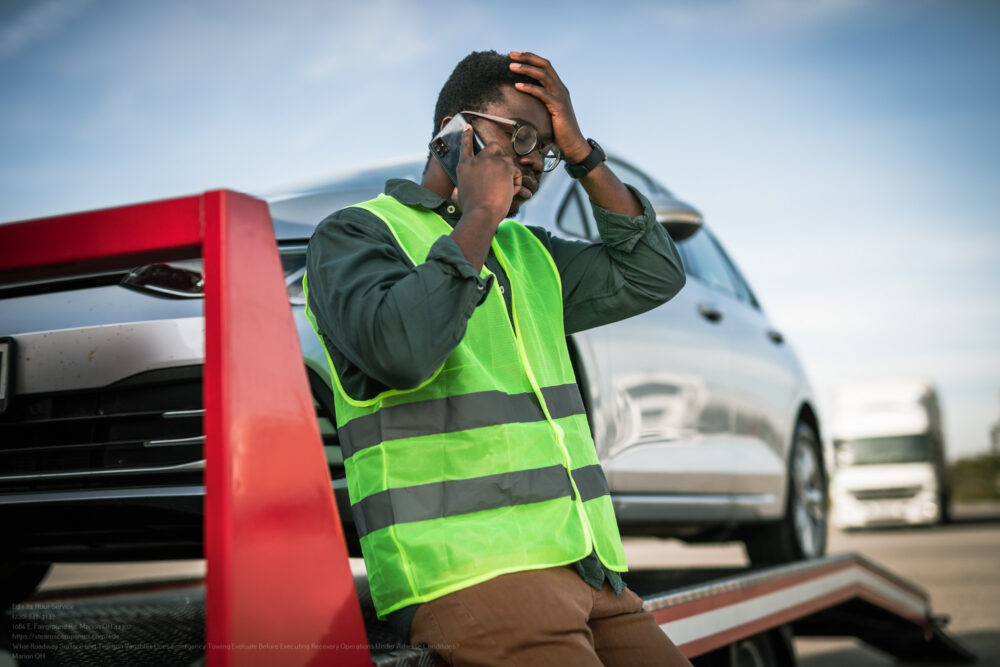
Several mistakes can increase risk during adverse-condition recovery. One is assuming wet pavement behaves like dry pavement. Another is positioning a recovery vehicle on a soft shoulder without considering whether its weight could reduce stability. A third is selecting equipment based solely on vehicle size, rather than the vehicle’s actual position and the forces required to move it.
Other challenges include ignoring standing water, overlooking a downhill grade, failing to account for loose gravel, and treating snow or ice as a minor inconvenience. Each condition can influence braking, steering, winching, and load transfer. FHWA emphasizes that towing and recovery personnel are responsible for safely removing disabled vehicles and debris while protecting property and supporting safe incident clearance.
Ed’s 24 Hour Service approaches these situations with appropriate recovery equipment and a broad towing fleet. Its capabilities include heavy-duty towing, recovery, roadside assistance, and transportation. The company has served Findlay, Bluffton, Upper Sandusky, and Marion, Ohio, since 1970, with professionally certified technicians and 24-hour service.
Need Emergency Towing?
Contact Ed’s 24 Hour Service for dependable towing, recovery, and roadside assistance support.
How Does Emergency Towing in Bluffton Account for Traction Before a Pull?
Before emergency towing in Bluffton operations begin, traction should be considered alongside vehicle weight, roadway grade, wheel position, and the direction of the recovery force. A tow truck may have sufficient capacity on paper, but the available traction underneath the recovery vehicle can still affect how safely that capacity is used.
For example, pulling a disabled truck uphill on wet pavement can create conditions very different from those when moving the same truck across dry, level asphalt. The recovery team may need to adjust equipment placement, pulling direction, or the recovery sequence rather than simply increasing force. This is one reason scene safety must remain central throughout the operation.
Hazard lights and appropriate safety equipment can also help identify the recovery area, but visibility doesn’t eliminate traction hazards. Public Safety personnel, emergency medical first responders, Law Enforcement, and towing professionals may all have different responsibilities at an incident.
Why Equipment Choice Matters More When Traction is Limited
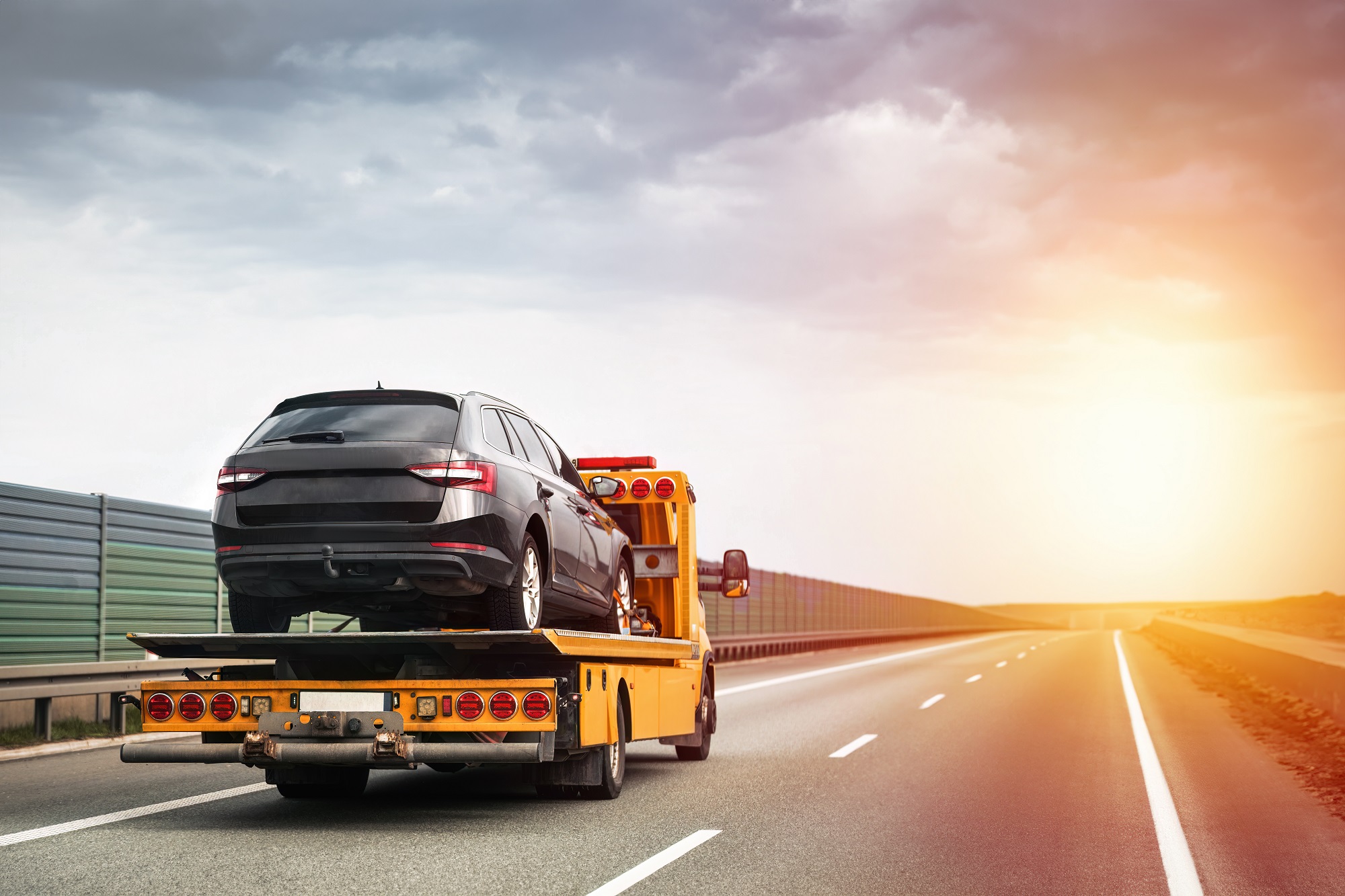
The correct equipment can make a major difference when surface conditions aren’t ideal. Flatbed towing may be appropriate for certain vehicles, while heavier incidents can require specialized recovery equipment and carefully controlled pulling forces. The objective isn’t simply to move the vehicle; it’s to move it while protecting the vehicle, responders, roadway, and surrounding property.
Ed’s 24 Hour Service operates a fleet capable of handling a range of recovery needs, including heavy-duty towing and recovery. Its equipment includes a 75-ton rotator capable of handling large semi-trucks and construction equipment. The company also offers heavy-duty truck repair and equipment repair when a vehicle requires more than just transportation after recovery.
That capability can be especially useful after an accident, when the vehicle may have damaged wheels, suspension components, cargo, or other structural components. A vehicle shouldn’t automatically be considered ready for ordinary towing simply because it can be moved.
What Local Search Terms Don’t Always Tell Drivers about Bluffton
Online searches can combine information from very different places and organizations. For example, Hilton Head, South Carolina; Port Royal; Bluffton University; Fort Myers; Cape Coral; Southwest Florida; Wells County; and Bluffton, IN are geographic or institutional terms that may appear in searches for towing, emergency services, or public safety. Still, they shouldn’t be confused with Ed’s Ohio service area.
The same applies to names and phrases such as Bluffton Police Department, Sheriff’s Office, Wells County Sheriff’s Office, Scott Holliday, Tara Smith, School Resource Officer, Reserve Officer, Public Information, Jail Information, and home and business check. These terms may belong to unrelated agencies, people, or search results and aren’t presented as Ed’s personnel or services.
The distinction matters because drivers need accurate information during stressful incidents. Ed’s official service-area information states that the company generally responds within a 50-mile radius of Findlay and provides towing and transportation capabilities beyond that area.
Why Ed’s 24 Hour Service is a Smart Recovery Partner
We at Ed’s 24 Hour Service provide the best solutions to our customers. When roadway conditions are difficult, our approach focuses on selecting appropriate equipment, assessing the recovery situation, and moving vehicles and property with care.
Our services include emergency towing, heavy-duty towing, towing recovery, roadside assistance, commercial towing, and mobile repair support for demanding roadside situations. With service to Bluffton and other Ohio communities since 1970, our team brings decades of towing and repair experience to recovery calls.
Ed’s 24 Hour Service also maintains equipment to handle substantial recovery demands, including a 75-ton rotator, and its repair capabilities can support vehicles after recovery when additional work is required. Contact Ed’s 24 Hour Service for dependable recovery support when roadway and traction conditions make a towing situation more complicated. For drivers seeking emergency towing in Bluffton, careful evaluation of roadway surface and traction variables helps make recovery safer and more controlled.
Need Emergency Towing?
Contact Ed’s 24 Hour Service for dependable towing, recovery, and roadside assistance support.