How Can Pressure Testing Reveal Steering Problems Before They Become Dangerous?
When a heavy-duty truck’s steering starts to feel loose, slow to respond, or unusually hard to turn, the cause may be hidden within the hydraulic system. For drivers seeking truck repair in Findlay, identifying internal leakage early can help prevent worsening steering performance and unexpected downtime.
Ed’s 24 Hour Service provides heavy-duty repair, emergency mobile repair, and roadside support. Hydraulic pressure differential testing helps technicians compare pressure at different points in a steering system while the system operates under controlled conditions.
By checking pressure changes, fluid flow, and steering response against manufacturer specifications, technicians can identify possible internal leakage in components such as the steering control valve or hydraulic steering gear without relying on guesswork alone.
What Does Hydraulic Pressure Differential Testing Tell a Technician?
Heavy-duty hydraulic steering systems use pressurized fluid to help move steering components. A pump supplies fluid, hoses carry it through the system, and control valves direct pressure where it’s needed. Depending on the truck’s design, a steering gear or hydraulic assist unit then helps turn the wheels. When an internal seal wears, or a valve fails to control flow correctly, fluid may pass through a component without producing the expected steering force.
This is known as internal leakage. Unlike an external leak, it may not leave a puddle beneath the truck. Instead, pressure may fall across a component, steering response may weaken, or the system may struggle when the driver turns the wheel under load.
During pressure differential testing, a technician uses suitable gauges or diagnostic equipment to compare readings at specified test points. The results are assessed alongside fluid condition, operating temperature, engine speed, and manufacturer procedures. One reading rarely tells the whole story; the pattern across several tests is what helps narrow down the fault.
Drivers often ask, can a hydraulic steering system lose pressure without leaking fluid externally? Yes. Worn internal seals or a malfunctioning control valve can allow fluid to bypass the intended route, reducing steering assistance without creating an obvious external leak. Professional testing helps distinguish that problem from pump wear, restricted hoses, or other faults.
Some Costly Steering Diagnostic Mistakes that Can Hide Internal Leakage
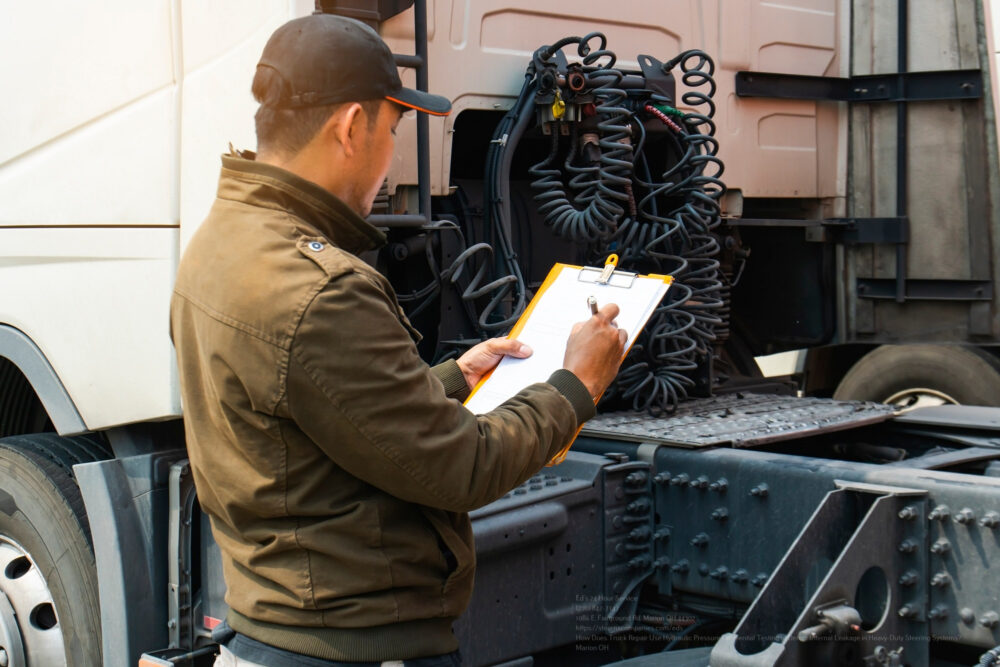
Hydraulic steering problems can resemble several other mechanical faults, which is why replacing parts based on symptoms alone can lead to repeat repairs. A driver might notice heavy steering and assume the pump has failed, even though a worn seal inside the steering gear is allowing fluid to bypass its intended path.
One common mistake is checking only for external fluid leaks. Internal leakage may occur without visible drips, so the absence of a wet hose doesn’t prove the system is healthy. Another mistake is testing pressure without checking flow, fluid temperature, and engine speed.
Technicians can also misdiagnose a weak pump as a defective steering gear, overlook restricted hoses, or ignore air entering the hydraulic circuit. Each fault can affect pressure and steering response differently. Manufacturer-specific test procedures help identify the source of the issue before major components are replaced.
For reliable truck repair in Findlay, the diagnostic process should follow evidence rather than assumptions. The technical support resources from R.H. Sheppard explain how hydraulic steering assessments use pressure, flow, engine speed, and temperature readings to evaluate steering system performance. These checks require suitable equipment and trained personnel because high-pressure hydraulic systems can cause serious injuries if tested incorrectly.
Ed’s 24 Hour Service provides heavy-duty repair, emergency heavy-duty mobile repair, and roadside assistance for commercial vehicle problems. When a steering issue makes a truck unsafe to operate, arranging professional help is more sensible than continuing to drive and risking a loss of control.
Need Heavy-Duty Steering Repair In Findlay?
Contact Ed’s 24 Hour Service for dependable repair and roadside support.
How Early Detection Protects Drivers, Loads, and Fleet Schedules
A steering system that loses hydraulic efficiency may require more driver effort, respond more slowly, or behave inconsistently during tight turns. These symptoms can make low-speed maneuvering difficult around loading docks, work areas, and busy commercial routes. In a heavy vehicle, delayed steering response deserves prompt attention.
Pressure differential testing helps technicians narrow the problem to a particular component or circuit. If readings indicate excessive internal leakage, further testing can determine whether the steering gear, control valve, pump, or an auxiliary hydraulic component needs attention. This focused approach can reduce unnecessary replacement work and help prevent the same complaint from returning.
For fleet managers, the benefit is practical: better diagnostic information supports repair planning and can reduce avoidable downtime. Ed’s 24 Hour Service offers heavy-duty towing and recovery support when a truck cannot safely continue. Clear communication and customer care also help drivers understand the next step, from roadside assessment to transportation for further repair.
What Drivers Can Check Before Requesting Heavy-Duty Repair
Drivers can help narrow down a steering fault by noting when it occurs and accurately describing the symptoms. Does the steering wheel become harder to turn after a long drive? Is there a whining sound from the pump? Does the system respond differently when turning left compared with turning right? These observations give the technician a useful starting point without requiring the driver to perform hazardous tests.
Routine inspections can also identify warning signs early. Drivers should report changing fluid levels, damaged hoses, foamy fluid, unusual steering effort, and new noises. They should never place their hands near moving components or loosen pressurized hydraulic fittings to investigate a suspected internal leak. If steering performance suddenly deteriorates, they should stop somewhere safe and request emergency assistance.
Fleet managers may coordinate steering repairs with other maintenance tasks, such as cooling system checks, suspension service, wheel alignments, truck alignment, and annual/DOT inspections. These are separate maintenance needs, so their relevance depends on the vehicle’s condition and the services available from the chosen provider. Mobile welding, aluminum repair welding, and collision damage repairs address different problems and should not be treated as substitutes for hydraulic steering diagnostics.
When arranging help, drivers may search for driving directions, optimized routes, or a location such as 1531 Harvard Ave. They should confirm the repair provider’s current address and service availability before traveling. If the steering system makes the truck unsafe to drive, heavy-duty towing is a safer option than attempting to reach a shop.
Choose Ed’s 24 Hour Service For Dependable Truck Repair in Findlay
We at Ed’s 24 Hour Service provide the best solutions to our customers by focusing on dependable heavy-duty support and practical repair decisions. We understand that steering problems can disrupt deliveries, affect fleet schedules, and pose serious safety risks when left unchecked.
We provide 24/7 heavy-duty repair and emergency heavy-duty mobile repair for commercial vehicles experiencing unexpected trouble. Our heavy-duty towing, towing recovery, and roadside assistance services can also help when a truck cannot safely continue its journey.
We encourage drivers to act promptly when steering becomes heavy, inconsistent, or slow to respond. Contact Ed’s 24 Hour Service for assistance with heavy-duty vehicle problems and to discuss the appropriate next step. For dependable truck repair in Findlay, choose Ed’s 24 Hour Service for support when hydraulic pressure testing points to internal leakage or another steering system concern.
Need Heavy-Duty Steering Repair In Findlay?
Contact Ed’s 24 Hour Service for dependable repair and roadside support.