Emergency Towing Hancock County OH for Safe Help After Accidents and Breakdowns
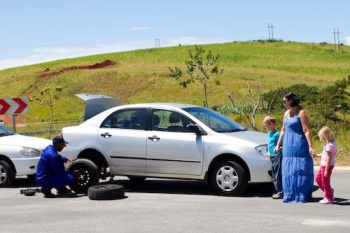
A vehicle does not have to be completely disabled to need emergency towing. After a collision, the engine may still run while steering or suspension damage makes driving unsafe. A mechanical problem can allow a vehicle to move while putting additional components at risk. On a rural Hancock County road, even a manageable breakdown can become more serious when the vehicle is stranded far from a repair facility or in an unsafe position.
Dick’s Towing Service provides emergency towing in Hancock County, Ohio, for motorists dealing with accidents, breakdowns, mechanical failures, damaged vehicles, and other situations where continuing to drive may no longer be the right choice.
Since 1976, Dick’s Towing has served Findlay and the surrounding area. Our operation includes 24/7 staffed dispatch, trained operators, a 45-vehicle fleet, roadside assistance, recovery capabilities, and light- through heavy-duty towing for passenger vehicles, pickups, SUVs, RVs, commercial vehicles, and larger equipment.
When a roadside problem occurs, you do not need to diagnose it yourself. Start by telling dispatch where you are, what you are driving, and what happened. From there, the appropriate next step can be determined.
CShould You Keep Driving or Call for Emergency Towing?
This is often the most important question after something goes wrong.
A vehicle’s ability to move does not necessarily mean it should remain on the road.
Several conditions may indicate that stopping and requesting professional assistance is the more practical option.
The Vehicle Handles Differently After an Accident
Collision damage is not always easy to see.
A wheel may have shifted. Suspension components can be damaged. Steering may feel different. Body panels can rub against a tire, or fluid loss can create additional mechanical concerns.
If the vehicle behaves differently after an impact, avoid assuming that a short drive to a repair facility is harmless.
Emergency towing allows the vehicle to be transported without depending on damaged systems to get it there.
The Engine Is Overheating or Losing Power
An overheating engine, sudden loss of power, repeated stalling, or unusual warning indicators can signal a vehicle breakdown that deserves attention.
Continuing to operate the vehicle may potentially create additional vehicle damage.
Depending on the circumstances, roadside evaluation may be appropriate. When the vehicle cannot reasonably or safely return to service where it stopped, towing provides a way to move it toward repair.
Tire or Wheel Damage Makes Driving Unstable
Some tire problems can be addressed through roadside assistance. Others make transportation a better option.
A severely damaged tire, bent wheel, or collision-related wheel problem can affect vehicle stability and control.
Dick’s Towing has experience with tire repair and replacement and maintains national account relationships with Goodyear, Bridgestone, and Michelin.
Describe what you can see when calling so the situation can be evaluated.
Emergency Towing Looks Different Across Hancock County
Hancock County combines busy highways, Findlay streets, smaller communities, county roads, and rural routes.
That creates a wide range of places for an emergency to happen.
A driver near Findlay may be able to provide a precise street address. Someone between McComb and another community may only know the road number and nearest intersection. A motorist traveling through the county on I-75 may know the direction of travel but little else about the area.
All of that information can be useful.
When requesting emergency towing, provide whatever location details you have, such as:
- Highway or road name
- Direction of travel
- Nearest intersection
- County or township road number
- Exit or mile marker
- Closest community
- Nearby landmark or business
- GPS location
Dick’s Towing serves Findlay and the surrounding region, including Hancock County communities such as Van Buren, Arlington, Arcadia, McComb, Rawson, Mount Blanchard, Mount Cory, Benton Ridge, Jenera, and Vanlue.
The area’s major routes also include I-75, US 224, US 68, SR 12, and SR 15.
Where the vehicle stops can influence both the urgency of the situation and how the towing response is planned.
After a Collision, Protect Yourself Before Worrying About the Vehicle
Vehicle transportation is important after an accident, but personal safety comes first.
If there are injuries, fire, an immediate traffic hazard, or another situation requiring police, fire, or medical assistance, contact the appropriate emergency authorities.
Avoid standing in active traffic lanes or placing yourself between moving traffic and the damaged vehicle.
Once immediate safety concerns are being handled, contact Dick’s Towing Service.
Tell dispatch whether:
- The vehicle can roll
- The steering appears functional
- Wheels or tires are visibly damaged
- Fluids appear to be leaking
- The vehicle remains on the roadway
- It has entered a ditch or other off-road area
- A trailer is involved
These details can influence how a damaged vehicle needs to be handled.
Professional towing involves more than connecting equipment and moving the vehicle. Existing damage, vehicle position, traffic, and appropriate safety protocols all need to be considered during loading, securing, and transportation.
When the Vehicle Has to Be Recovered Before It Can Be Towed
An accident or loss of control can leave a vehicle somewhere a normal towing approach cannot immediately reach it.
That is where towing and recovery become two different parts of the same job.
Dick’s Towing provides vehicle recovery, offroad recovery, and related recovery services for vehicles that need to be repositioned before transportation.
Hancock County’s rural roads can create several recovery environments. A vehicle might enter a roadside ditch, slide onto soft ground, come to rest on an embankment, or leave the pavement during snow or icy conditions.
Experienced recovery experts may consider:
- Vehicle weight and orientation
- Distance from the road
- Slope and terrain
- Soil or ground stability
- Weather
- Existing accident damage
- Nearby obstacles
- Access for recovery equipment
Once the vehicle has been recovered to a suitable position, its condition can determine whether it can return to service or needs towing.
When calling, describe where the vehicle ended up rather than simply saying it needs a tow. That information can help dispatch prepare for the recovery component of the call.
Roadside Assistance May Prevent an Unnecessary Tow
An urgent roadside problem does not always require vehicle transportation.
Sometimes the vehicle can be safely returned to service at its current location.
Dick’s Towing provides roadside assistance in addition to towing and recovery, with experience in roadside repair, tire service, and computer-based diagnostics.
That gives the response more flexibility.
For example, a driver may call because the vehicle suddenly stopped but have no idea what caused it. Roadside evaluation may help determine whether the problem can reasonably be addressed there.
The roadside environment matters, however.
A repair that is practical in a safe parking area may not be appropriate on a narrow shoulder near fast-moving traffic. In those situations, transportation can still be the safer next step even when the underlying mechanical issue might otherwise be repairable.
The objective is not to tow every vehicle. It is to determine an appropriate solution based on both the problem and the location.
Where Should Your Vehicle Go After Emergency Towing?
Once a vehicle needs to be transported, another decision follows quickly: where should it go?
For a local Hancock County resident, that might be a familiar repair shop or dealership.
For someone traveling through the area, the answer may be less obvious.
Dick’s Towing provides vehicle transports to destinations based on the customer’s needs and circumstances. Those may include:
- Automotive repair facilities
- Dealerships
- Storage locations
- Commercial repair facilities
- Fleet locations
- Other requested destinations
Dick’s is also licensed to tow and transport throughout the continental United States, allowing its transportation services to extend beyond Hancock County when needed.
If you already know your destination, provide it during the initial call.
Thinking about the destination early can help move the process from “How do I get off the roadside?” to “How do I get this vehicle where it needs to be?”
Commercial Vehicle Emergencies Require a Different Towing Plan
Hancock County’s highways carry commercial traffic in addition to passenger vehicles.
When a tractor-trailer, work truck, or other large vehicle becomes disabled, the towing requirements can change considerably.
Dick’s Towing provides light and heavy duty towing, including capabilities for larger commercial equipment.
Dispatch may need additional information such as:
- Truck type
- Trailer configuration
- Approximate vehicle size
- Load information when relevant
- Whether the vehicle is loaded or empty
- Roadway position
- Mechanical symptoms
- Collision damage
These details help determine what heavy-duty equipment may be appropriate.
Dick’s broader commercial capabilities also include semi truck repairs, truck and trailer service, roadside repairs, computer diagnostics, tire work, preventative maintenance, annual inspections, and load corrections.
For a commercial operator, emergency towing can therefore become part of a larger process: safely moving the truck, determining what failed, and working toward returning the equipment to service.
Bad Weather Can Change a Routine Tow Into an Emergency
Ohio weather can turn a manageable vehicle problem into a more complicated roadside situation.
Snow and ice can reduce traction. Rain can soften shoulders and roadside terrain. Low temperatures may contribute to battery and mechanical problems. Reduced visibility can also make waiting beside the road more hazardous.
If weather contributed to the incident, tell dispatch.
A vehicle that slid from an icy roadway may need recovery rather than ordinary towing. A heavy vehicle on unstable ground can require additional planning. Snow or poor visibility may also affect access and response times.
Dick’s Towing maintains staffed dispatch 24 hours a day, seven days a week, so roadside assistance is not limited to normal Office Hours.
Actual response times throughout Hancock County vary according to location, weather, traffic, call volume, and the type of equipment required.
Experience Matters When the Vehicle Is Already Damaged
Emergency towing often involves vehicles that are not in normal operating condition.
That makes operator preparation particularly important.
Dick’s Towing Service has served the area for 50 years. Operators complete a 90-day training program, while equipment undergoes annual inspections according to applicable state and federal regulatory standards.
The company’s 45-vehicle fleet supports towing and recovery needs ranging from passenger cars to heavier commercial vehicles.
That combination becomes important when a call involves unusual circumstances.
A collision-damaged car may not roll normally. A vehicle in a ditch may require recovery before loading. A tractor-trailer can require substantially different equipment from an SUV.
Professional emergency towing means evaluating those differences before deciding how the vehicle should be moved.
Emergency Towing Across Hancock County Day or Night
A breakdown can happen in Findlay during the morning commute, outside Arlington late at night, near Van Buren during poor weather, or along a rural road where the nearest landmark is several miles away.
Dick’s Towing Service generally serves a roughly 50-mile radius around Findlay, providing coverage throughout Hancock County and surrounding areas.
If you are in an unfamiliar location, use the information available to you.
A GPS pin, highway marker, road number, intersection, nearby community, or recognizable property can help dispatch establish your location.
Then explain what happened to the vehicle.
Those two pieces of information; location and vehicle condition—provide a useful starting point for deciding whether the situation calls for roadside service, towing, recovery, or heavier equipment.
When Continuing the Drive Isn’t Worth the Risk
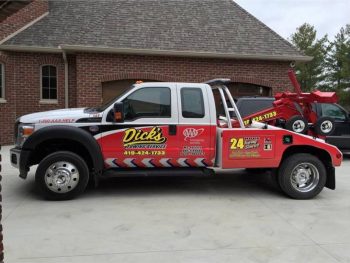
After a breakdown or accident, the hardest decision can be knowing whether the vehicle should keep moving under its own power.
If steering feels wrong, the engine is overheating, a wheel has been damaged, or the vehicle has left the roadway, another few miles may create more problems rather than solve the first one.
That is where emergency towing becomes the bridge between an unexpected roadside problem and whatever needs to happen next.
With 50 years serving Findlay and the surrounding area, 24/7 staffed dispatch, trained operators, a 45-vehicle fleet, roadside assistance, recovery experience, and light- through heavy-duty towing capabilities, Dick’s Towing Service is prepared to help Hancock County drivers make that transition.
Call Dick’s Towing Service for emergency towing in Hancock County, OH, and tell dispatch where you are, what you’re driving, and what happened so the appropriate next step can be determined.