Catch Small Driveline Changes Before They Become Costly Truck Repairs
A clunk when shifting gears, a vibration under load, or a sudden jolt when accelerating can indicate a driveline problem that warrants attention. For commercial operators searching for truck repair in Bluffton, understanding how technicians diagnose driveline backlash can help prevent a minor mechanical issue from damaging expensive gears or differential parts.
Ed’s 24 Hour Service offers truck and heavy-duty service options for drivers who need help assessing commercial vehicle problems. Driveline backlash is the small amount of clearance between meshing gear teeth.
Technicians diagnose changes by inspecting driveline components, measuring gear movement with suitable tools, checking lubricant condition, and comparing readings with manufacturer specifications. These steps help distinguish normal operating clearance from excessive wear, misalignment, or damage that could worsen if the truck continues working.
Why Does Driveline Backlash Matter so Much in Commercial Trucks?
A truck’s driveline transfers engine power through the transmission, driveshaft, and differential to the wheels. Inside the differential, gears allow the wheels to rotate at different speeds when the vehicle turns. The gears need a specific amount of clearance to operate correctly, but too much or too little can cause problems.
Backlash is not automatically a fault. Gear teeth need some clearance to allow lubrication and normal movement. The concern arises when the measured clearance falls outside the manufacturer’s specifications or changes noticeably over time. Excessive backlash may cause clunking when the driver accelerates or releases the throttle, while incorrect gear contact can contribute to noise, heat, and accelerated wear.
For medium and heavy-duty trucks, the consequences can extend beyond the differential. Worn universal joints, loose driveshaft connections, damaged mounts, or transmission issues can create similar symptoms. A technician must inspect the complete driveline rather than assume every clunk comes from the differential.
What does this mean for businesses in Bluffton? A delivery truck, work vehicle, or fleet unit may spend hours carrying loads, changing speed, and traveling over uneven roads. Early diagnosis helps operators make informed repair decisions before driveline damage leads to unexpected downtime.
5 Diagnostic Mistakes That Can Let Gear Damage Progress
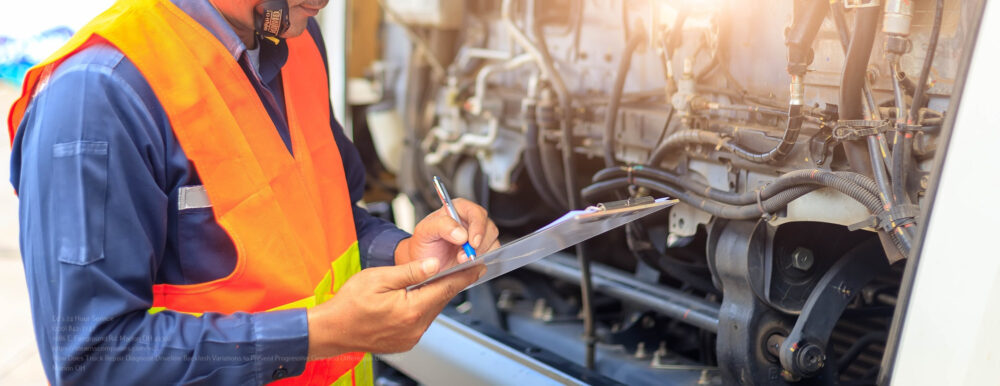
- Treating every clunk as a differential problem. A clunk during gear changes can come from worn universal joints, loose fasteners, excessive gear clearance, or movement in the transmission and mounts.
- Checking backlash without following the correct procedure. A technician needs to secure the vehicle, prevent unintended movement, and use the measurement method specified for that axle or differential.
- Ignoring lubricant condition. Metal particles, an unusual smell, low lubricant levels, or signs of contamination can indicate internal wear. However, clean-looking lubricant doesn’t prove that gears are healthy, so fluid checks should support—not replace—mechanical inspection.
- Overlooking connected driveline parts. Driveshaft wear, damaged bearings, loose yokes, and worn joints can imitate gear backlash symptoms. A complete inspection helps separate these faults and reduces the chance of unnecessary repairs.
- Continuing to operate a truck despite worsening symptoms. Drivers sometimes delay service because the truck still moves. But repeated impacts and abnormal gear contact can increase wear, particularly under heavy loads. If there is severe grinding, substantial vibration, or a sudden change in driveline behavior, the vehicle should be assessed promptly rather than pushed through another route.
Reliable diagnostic work depends on following the manufacturer’s service information and using appropriate tools. The National Institute for Automotive Service Excellence (ASE) provides information about automotive service technician certification and professional standards.
Need Truck Repair Support For Driveline Noise?
Contact Ed’s 24 Hour Service to discuss your truck’s condition and available assistance.
What Steps Help Technicians Diagnose Backlash More Reliably?
Other maintenance issues can complicate the diagnosis, as a check engine light may point to an engine or transmission control problem rather than differential backlash. Brake service, tire repair, wheel balancing, vehicle alignment, and suspension issues can also cause noise, vibration, or changes in handling that resemble driveline trouble.
Technicians should examine these related systems alongside the reported symptoms to identify the actual source rather than assuming every driving concern stems from the differential.
Preventive maintenance also plays an important role, as following the manufacturer’s service schedule, checking lubricant condition at recommended intervals, and addressing unusual noises early can help detect wear before it becomes more severe. Although regular oil changes support engine health, transmission and differential lubricants require their own service intervals and procedures.
What Can Fleet Managers Learn from Early Warning Signs?
A useful lesson for fleet managers is that the pattern of a symptom often matters as much as the symptom itself. A clunk that occurs when power is applied and then removed may suggest free play somewhere in the driveline, while a steady whine that changes with speed may point to a different issue. Neither symptom confirms a diagnosis on its own, but both give the technician a starting point.
Fleet managers should also keep clear maintenance records. Notes about when a noise began, previous repairs, lubricant service, load conditions, and mileage help technicians compare symptoms over time. Fleet repair services are easier to coordinate when drivers consistently report issues, and managers can prioritize vehicles showing signs of a serious mechanical fault.
When a truck needs more than a scheduled inspection, ask the repair provider what findings support its recommendation. A clear explanation of the measurement, the affected component, and the next step builds driver trust and helps business owners make informed decisions. Warranty coverage, such as a stated 2-year/24,000-mile warranty, should never be assumed; customers should verify the actual provider’s written terms, exclusions, and applicability before authorizing work.
Which Maintenance Habits Help Prevent Repeat Driveline Problems?
Backlash diagnosis is most effective when paired with routine maintenance and timely reporting. Trucks that regularly carry heavy loads or travel through demanding conditions may place substantial stress on driveline components. Following service intervals, using the correct lubricant, and responding to new noises can help identify developing issues earlier.
Drivers should report changes such as clunking during acceleration, a vibration that increases with road speed, unusual whining, or lubricant leaks near the axle housing. They shouldn’t attempt to measure backlash or work beneath an inadequately supported truck themselves. A professional inspection is the safer option when the cause isn’t clear.
Businesses should also avoid assuming that a repair provider’s marketing claims guarantee a particular result. Terms such as “dealership quality,” “precision service,” or “warrantied work” are only meaningful when the provider can explain its process and provide written details. Whether a shop advertises ASE-Master Certified technicians, state-of-the-art equipment, or a 2-year/24,000-mile warranty, customers should verify the credentials and coverage directly rather than relying on third-party listings or business information alone.
For fleets operating around Bluffton, preventive maintenance and accurate records can help keep commercial vehicles available for work. If symptoms point to a more serious failure, Ed’s 24 Hour Service can discuss appropriate truck and heavy-duty service options, including whether towing may be needed before further driving.
Why Ed’s 24 Hour Service is a Smart Choice for Truck Support
We at Ed’s 24 Hour Service provide practical solutions for customers dealing with commercial vehicle problems. We understand that unusual driveline noise can raise concerns about safety, downtime, and the cost of further damage. Hence, we encourage drivers to explain symptoms early and seek an appropriate assessment.
Our services include heavy-duty towing, emergency towing, and truck-related support for commercial vehicles that need assistance. We’ll help customers discuss their situation and determine which available service may fit their needs.
Don’t ignore a clunk, vibration, or other change in driveline behavior when it first appears. Contact Ed’s 24 Hour Service to discuss your truck’s condition and available support. For truck repair in Bluffton concerns, prompt diagnosis and a suitable repair plan can help protect gears, differentials, and the rest of the driveline.
Need Truck Repair Support For Driveline Noise?
Contact Ed’s 24 Hour Service to discuss your truck’s condition and available assistance.